

Rated 4.8


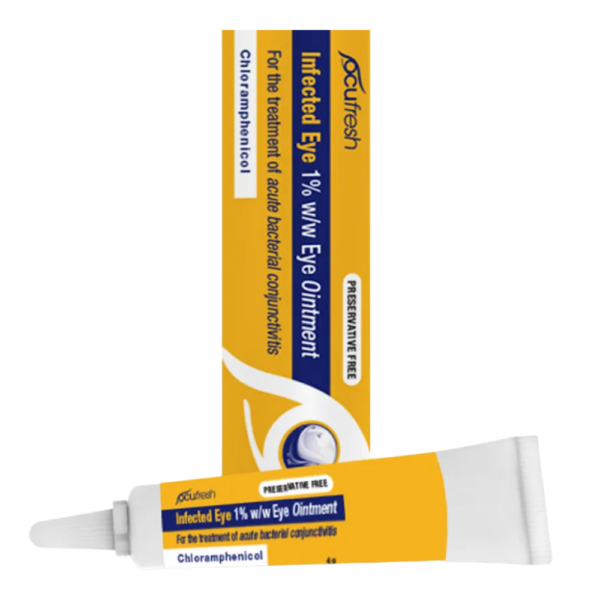
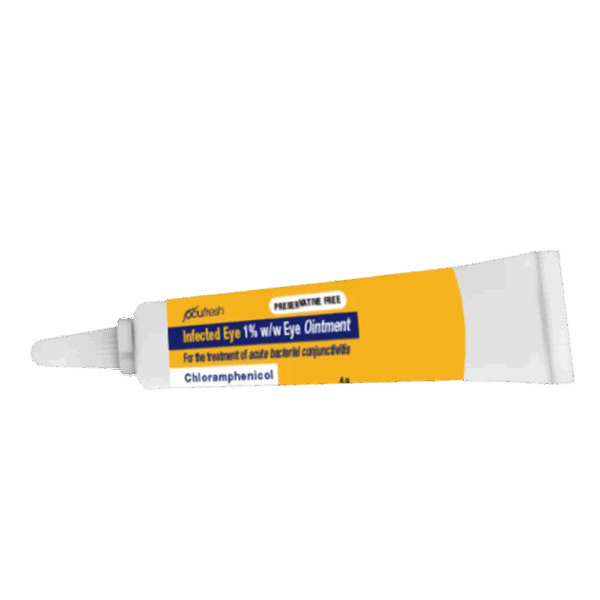
Chloramphenicol Eye Ointment

Price Checker

About the product
Chloramphenicol Eye Ointment is for simple eye infections called acute bacterial conjunctivitis, sometimes known as "red eye".
Overview
FAQ
Directions
Side Effects
How it works
Delivery
Ingredients
Warnings
Overview
Chloramphenicol belongs to a group of medicine called antibiotics. Chloramphenicol is used in both adults and children to treat bacterial conjunctivitis, which is an infection of the outer surfaces of the eye. The infected eye will probably be red, gritty or itchy. In the morning there will be a sticky discharge which may make it difficult to open the eye. When put in the eye, chloramphenicol works by helping kill the bacteria (germs) and allow the body to overcome the infection.
Frequently Asked Questions
Have a question? We’re here to help.
Can I use Chloramphenicol Eye Ointment for conjunctivitis?
Yes, Chloramphenicol Eye Ointment is commonly used to treat bacterial conjunctivitis, also known as pink eye. It works by stopping the growth of bacteria in the eye. However, it’s important to confirm the cause of your symptoms, as viral or allergic conjunctivitis will not respond to antibiotics. For more on conjunctivitis symptoms, visit the NHS Website or read our blog.
Is Chloramphenicol Eye Ointment safe to use with contact lenses?
You should avoid wearing contact lenses while using Chloramphenicol Eye Ointment, as the medication can interact with the lenses and may cause further irritation. Wait at least 24 hours after completing treatment before using lenses again. Learn more on safe contact lens practices.
Can I drink alcohol while using Chloramphenicol Eye Ointment?
There is no known direct interaction between Chloramphenicol Eye Ointment and alcohol, since the ointment is applied topically to the eye. However, drinking alcohol excessively may weaken your immune system and slow down your recovery.

Directions
Always use Chloramphenicol exactly as your doctor has told you. Check with your doctor or pharmacist if you are not sure. The recommended dose is two drops applied to the affected eye(s) every three hours. Use during waking hours only. Continue treatment at least 48 hours after the eye appears normal, or as directed by your doctor.
- First wash your hands
- Avoid touching the eye (or any other surface) with the tip of the bottle
- These drops are supplied as a sealed bottle with a spiked cap. When using the bottle for the first time, screw the cap down tightly in order to pierce the tip of the bottle
- Tilt your head back and look at the ceiling
- Pull the lower eyelid gently downwards
- Hold the bottle upside down above the eye and gently squeeze the bottle to release a drop into your eye
- Keep the affected eye closed and press your fingertip against the inside corner of the closed eye, and hold for 1 minute
- Repeat for the other eye if necessary
- Replace and tighten the cap immediately after use
- If you are using in combination with another eye drop medicine, wait 5-15 minutes before applying the second eye drop
More information can be found in the patient information leaflet that comes with your product or online.
Side Effects
Like all medicines, Chloramphenicol can cause side effects, although not everybody gets them. Some people find that their eyes sting or their sight is blurred immediately after using the drops. These effects should wear off after a short time. If prolonged irritation, swelling, watery eyes or sensitivity to light occurs, then exposed eye should be washed with water for 15 minutes. If the symptoms continue after this, an eye examination may be required.
Stop using your medicine and tell your doctor or pharmacist immediately if you experience the following side effects:
- Wheeziness (shortness of breath), fever, swelling of your face, lips or tongue, itching or rash with swelling of skin (the rash could be puffy (swollen) or blotchy, or look like little blisters.
- A sore throat, bruising or being unable to overcome an infection. On very rare occasions, patients using chloramphenicol have had changes in their blood cells causing severe tiredness or easy bruising.
If any of the side effects gets serious, or if you notice any side effects not listed in this leaflet, please tell your doctor or pharmacist.
How it works
Chloramphenicol Eye Ointment is an antibiotic that works by stopping the growth of bacteria in the eye. It blocks the bacteria’s ability to produce proteins they need to survive and multiply. This helps your immune system fight off the infection more effectively. It’s commonly used for bacterial eye infections, such as conjunctivitis, and starts working quickly to reduce redness, swelling, and discharge.
Delivery
Once you have brought Chloramphenicol Eye Ointment online, e-Surgery uses Royal Mail for delivery with choices of Royal Mail Tracked 48, Royal Mail Tracked 24, and Royal Mail Special Delivery by 1pm (learn more).
Your medication will be delivered to a delivery address of your choice in discreet and recyclable packaging.
Ingredients
This medicine contains the active ingredient Chloramphenicol 1.0 w/w. The other ingredients are Liquid Paraffin and White Soft Paraffin. Each tube contains 4 grams of yellowish-white eye ointment.
Warnings
You should not use Chloramphenicol Eye Ointment if:
- You are allergic to Chloramphenicol or any of the other ingredients of this medicine
- Have ever had problems with your blood (in particular with low numbers of blood cells) during previous treatments with chloramphenicol.
- Have a family history of blood problems such as low white blood cell, red blood cell or platelet count.
- You or a member of your family has had problems with their blood or bone marrow. These problems can include a severe reduction in red blood cells or lower than normal blood count
Additionally, tell your doctor if:
- Your eye is painful (rather than just feeling sore or gritty) or you have pain or swelling around the eye or face.
- Your sight is affected by loss of vision, reduced or blurred vision or you see halos around lights.
- It is too painful to open your eyes properly.
- Your pupil (the black circle in the centre of your eye) looks different. It may be torn, not round, very big or does not change size in the light.
- Your eye looks cloudy.
- Your eyes are sensitive to light.
- You have (or think you have) a foreign body in your eye, which has not been removed.
- You have had an eye infection in the past month.
- You have glaucoma (high pressure inside your eye).
- You have “dry eye syndrome”.
- You have injured your eye.
- You think there may be something in your eye or you have splashed something in your eye.
- You are already using other eye drops or eye ointment.
- You have had eye surgery or laser treatment in the last 6 months.
Same day dispatch:
0 minutes


Superintendent Pharmacist: Justin Dicks 2038305
© Total Access Health LTD. All rights reserved.
Pharmacy Address: 42 Barnard Road, Norwich, NR5 9JB